




Shock absorbers
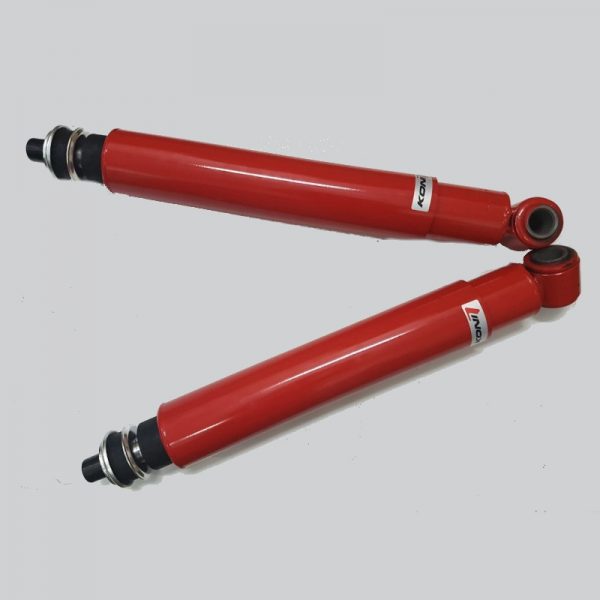
Renewal of Components for the Industrial Suspension System
In this section of the Enrique Requena online catalogue, you will find a specialized selection of shock absorbers for heavy-duty vehicles. These components are vital for absorbing road irregularities and maintaining tire contact with the surface, thereby ensuring load safety and driver comfort.
Our range of spare parts is aimed at transport professionals and workshops seeking effective solutions for the maintenance of trucks, buses and trailers. We offer references compatible with various models and brands, designed to withstand the demanding working conditions of industrial transport and extend the service life of the chassis assembly.
Criteria for Choosing the Correct Replacement
- OEM reference: Verify the original reference number of the replaced part to ensure full compatibility.
- Mounting type: Confirm whether the installation requires an eye-eye, stud-eye or stud-stud system, as well as the diameter of the bushings.
- Installation axle: Shock absorbers vary depending on whether they are installed on the front axle, rear axle or trailer axles.
- Functional dimensions: Check the maximum extended and minimum compressed length to avoid mechanical stops that could damage the component.
- Vehicle type: Ensure the replacement part is dimensioned for the specific load and application (urban bus, long-haul truck, construction use, etc.).
Frequently Asked Questions
When should truck shock absorbers be replaced?
Replacement is recommended when visible oil leaks are detected, uneven tire wear appears, or braking distance increases. It is also advisable to inspect them if instability is felt in curves or excessive cab pitching occurs, always following the maintenance intervals suggested by the vehicle manufacturer.
Is it necessary to replace shock absorbers in pairs?
Yes, it is standard practice in professional mechanics. To ensure vehicle balance and uniform suspension response, both shock absorbers on the same axle must be replaced simultaneously. Replacing only one may cause imbalance, affecting stability and accelerating wear on the new component.
How do I identify the compatible model for my heavy-duty vehicle?
The most accurate method is through the manufacturer’s cross-reference (OEM) found on the old part. If it is unreadable, you can consult our catalogue by filtering by vehicle brand, model and year, or review the technical sheet to confirm mounting type and working dimensions.
What is the difference between hydraulic and gas shock absorbers for industrial vehicles?
Conventional hydraulic shock absorbers use oil to dissipate energy, while gas-pressurized units (typically nitrogen-filled) reduce oil foaming (cavitation) under intense operation. The choice depends on the original chassis specifications and the typical load conditions the vehicle supports.
