




Crankshaft pulley
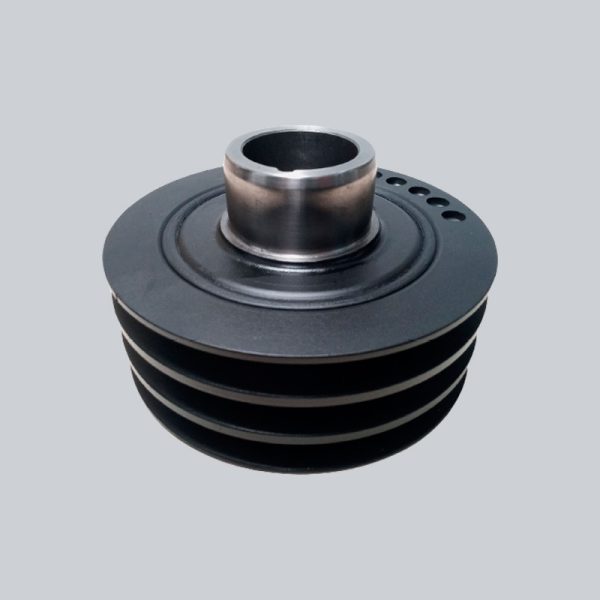
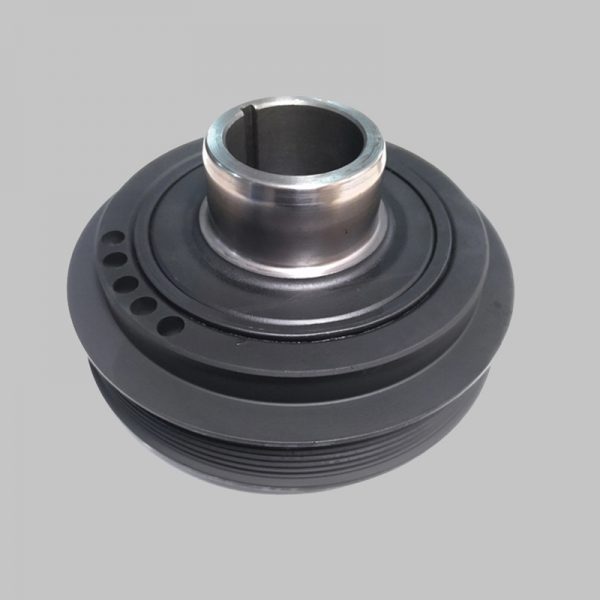
Technical Importance of the Crankshaft Pulley in Industrial Engines
In this section of our online catalogue, we offer a technical selection of crankshaft pulleys, a critical component for the proper operation of heavy-duty vehicles and industrial machinery. These parts are not only responsible for transmitting motion to auxiliary accessories, but also play a fundamental role in absorbing the torsional vibrations generated during combustion in large-displacement engines.
Our range is aimed at professional mechanics, fleet managers and maintenance experts who require precise replacement parts for trucks, buses and tractors. Ensuring the integrity of this component helps prevent major failures in the engine block and guarantees the longevity of the timing system and accessories.
How to identify the correct replacement for your vehicle
- OEM reference: The safest way to ensure accuracy is to compare the manufacturer’s original reference number with the spare part technical sheet.
- Number of grooves and profile: Verify the number of ribs or belt grooves and the corresponding belt profile to ensure proper drive without slipping.
- Exact dimensions: Check the outer diameter, inner diameter and pulley width to guarantee correct installation on the crankshaft housing.
- Damping type: In heavy-duty vehicles, make sure the damper pulley includes the appropriate bonded rubber or mass system required to dissipate the specific vibrations of your engine.
- Engine compatibility: Review the engine specifications, as the same truck model may be equipped with different power units.
Frequently Asked Questions
What is the function of the crankshaft pulley in a truck?
Its main function is to transmit the engine’s rotational force to auxiliary components such as the alternator, water pump or air conditioning compressor via belts. Additionally, it acts as a vibration damper to protect the crankshaft from torsional stresses.
What are the symptoms of a worn or faulty damper pulley?
The most common signs include metallic noises or squealing from the belt area, unusual vibrations in the cabin at idle and irregular wear of the accessory belt. Visually, it may show cracks in the rubber or separation between the metal sections.
Is it necessary to replace the belt when changing the pulley?
Although not strictly mandatory, it is a highly recommended mechanical practice. Installing a new pulley restores optimal tension and alignment; keeping an old or worn belt may compromise the performance of the new replacement and reduce its service life.
What happens if the crankshaft pulley breaks while driving?
Failure causes the immediate stoppage of auxiliary systems, resulting in loss of alternator charging, power steering and, most critically, engine cooling. This may lead to severe overheating and costly engine damage if the vehicle is not stopped in time.
